Matcha and health are often mentioned together. Online, you quickly come across words such as antioxidants, L-theanine, caffeine, energy and wellness. That can sound appealing, but it is worth looking at matcha calmly. Matcha is first of all finely ground Japanese green tea. It can have a beautiful place in your daily routine, but it is not a medicine, a supplement or a quick solution.
In this guide, we explain which compounds in matcha are often discussed, what you can and cannot realistically expect and how to use matcha in a sensible way. The aim is not to make big promises. It is to help you understand why matcha can feel different from regular tea or coffee and how to choose a product that fits the way you prepare it.
Why matcha is different from regular green tea
With many green teas, you steep the leaves in hot water and drink only the infusion. With matcha, you drink the whole leaf in powdered form. The leaf is finely milled and then whisked directly with hot water or mixed with milk. That means you are not only drinking compounds extracted into water; you are drinking the tea powder itself.
This gives matcha its intense character and explains why quality, freshness and dosage matter so much. A good matcha can taste smooth, green, fresh, vegetal and rich in umami. Older matcha or matcha that has not been stored well can taste flat, rough or bitter. If you choose matcha with health in mind, it is therefore useful to look not only at individual compounds, but also at taste, storage and preparation.
Catechins: plant compounds in green tea
Catechins are natural plant compounds found in green tea. Matcha contains catechins because it is made from tea leaves. They are often mentioned in articles about green tea, mainly because they are widely studied in relation to food and tea. Still, it is better not to turn catechins into a hard health promise.
For you as a consumer, the practical takeaway is simpler: catechins are part of the character of green tea and can contribute to the clear, sometimes lightly bitter tea taste. The amount and the way you experience it depend on the leaf, harvest, processing, dosage and preparation. If you drink matcha on its own with hot water, bitterness is easier to notice than when you use matcha with milk or in a recipe.
L-theanine: important for taste and tea experience
L-theanine is an amino acid that occurs naturally in tea leaves. In matcha, L-theanine is often discussed because it is associated with the softer, umami-rich side of tea. That does not mean every matcha gives the same feeling or the same taste. The balance between L-theanine, caffeine, catechins and other components differs by product and preparation.
In practice, you recognise a pleasant profile mostly through taste. A matcha with enough smoothness and umami feels rounder in the mouth and is less likely to become sharp when you drink it with hot water. If you are looking for matcha for pure preparation, start with ceremonial matcha or a premium matcha. If you mainly make lattes, it is more important that the matcha mixes well and remains recognisable in milk.
Caffeine in matcha: pay attention to your own sensitivity
Matcha contains caffeine. The amount depends on how much powder you use, the type of matcha and how strong you make your drink. Because you drink the powder itself, a bowl of matcha or a matcha latte can be clearly noticeable, especially if you are sensitive to caffeine.
Caffeine does not affect everyone in the same way. One person can drink matcha in the afternoon without any issue, while another may feel restless or sleep less well. Use matcha consciously. Start with a normal small serving, avoid drinking it late in the day if you are sensitive to caffeine and pay attention to how your body responds.
For general caffeine safety, many European sources refer to EFSA. EFSA looks at caffeine in the context of total daily intake. Matcha is therefore not the only source to keep in mind: coffee, energy drinks, cola, black tea, green tea and chocolate can all contribute to your total caffeine intake.
What not to expect from matcha
Matcha is sometimes sold with big claims. Think of detox, fat burning, anti-ageing, perfect focus or protection against disease. Those are not good promises for a consumer website. They make matcha sound bigger than it is and can create the wrong expectations.
A realistic view is stronger. Matcha is a flavourful tea product with a rich Japanese background. It contains interesting compounds, but it does not replace a varied diet, sleep, movement or medical care. Use matcha because you enjoy the taste, the preparation and the ritual. See it as part of a conscious routine, not as a solution to a health problem.
How much matcha per day makes sense?
There is no single amount that is ideal for everyone. Many people use 1 to 2 grams of matcha per preparation. If you make a latte or a strong iced matcha, the dosage may be higher. If you drink several cups of coffee on the same day, it is sensible to include matcha in your total caffeine intake.
If you are pregnant, breastfeeding, taking medication or strongly sensitive to caffeine, speak with a qualified professional before drinking a lot of matcha. That may sound cautious, but it fits honest communication. Matcha should fit into your day in a way that feels pleasant and responsible.
Preparation makes a big difference
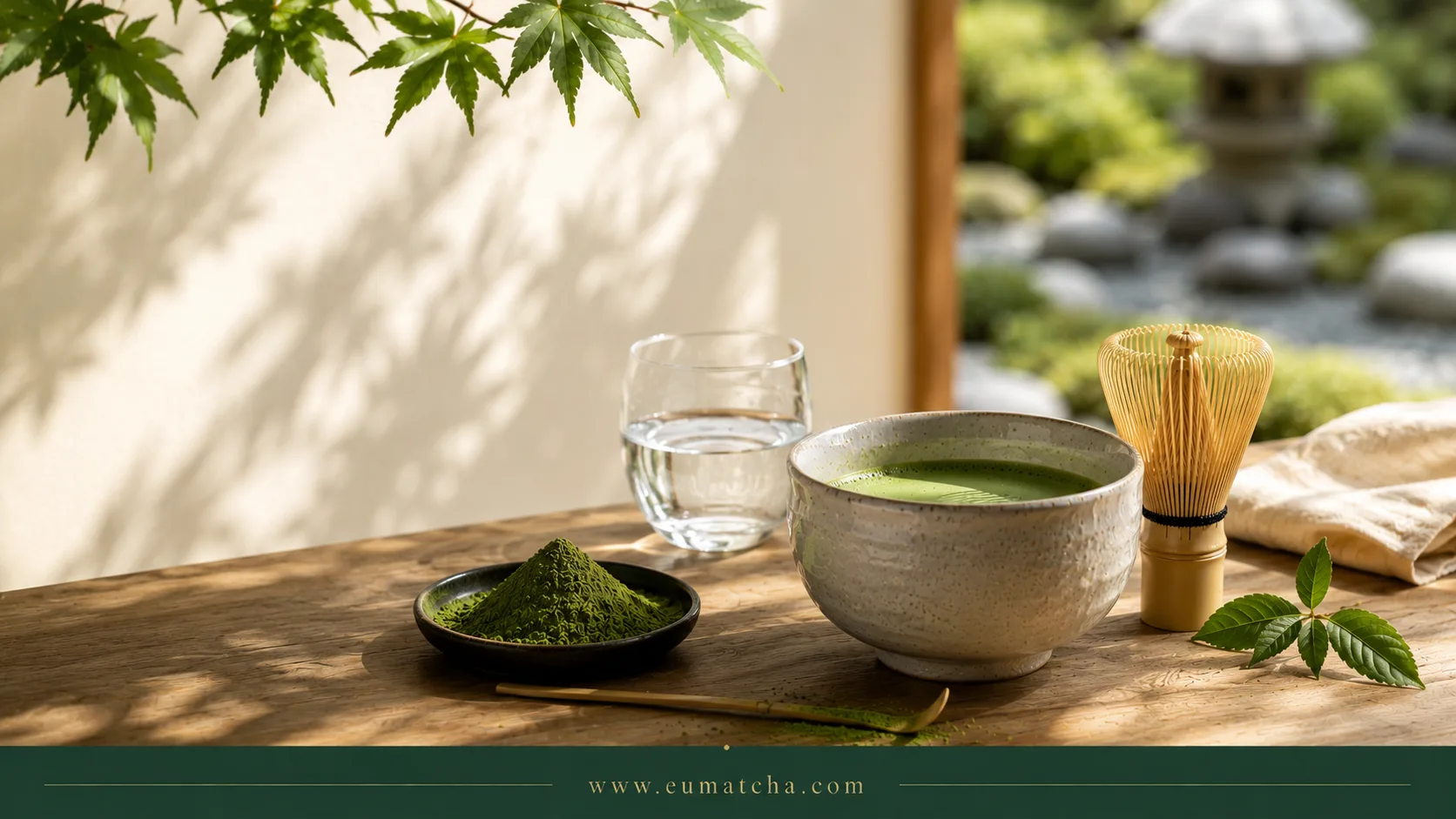
The way you prepare matcha has a major effect on your experience. Use hot water that is not boiling, around 70 to 80 degrees Celsius. Sift the powder, whisk a smooth base first and then add the rest of the water or milk. With a chasen, the bamboo whisk used for matcha, you can create a light foam. A milk frother can also be practical for everyday use.
With pure matcha, you taste quality most clearly. Bitterness, umami, aroma and aftertaste stand out immediately. In a matcha latte, milk or plant-based milk softens the taste. For cake, ice cream, smoothies and desserts, culinary matcha is usually the better choice, because colour, dosage and a recognisable matcha flavour matter more than refinement in hot water.
Storage is part of realistic expectations
Even good matcha loses character quickly when it is stored poorly. Light, air, heat and moisture make aroma and colour fade faster. Close the packaging well, use a dry spoon and store matcha in a cool, dry and dark place. It is often better to buy a size that fits your rhythm than a large pack that stays open for months.
This is especially important when you drink matcha pure. Fresh, well-stored matcha tastes cleaner and smoother, which makes you less likely to add a lot of sweetness. You can find more practical advice on our page about storing matcha.
Which matcha fits your routine?
Do not choose matcha only because you have read something about health. Choose mainly based on how you want to use it. If you want a pure bowl with hot water, look for a smooth matcha with low bitterness. If you mainly want lattes, choose a matcha that holds its flavour in milk. If you use matcha in recipes, a practical culinary matcha often makes more sense.
Start simply. Choose one matcha, prepare it the same way a few times and pay attention to taste, aroma, colour and how it feels for you. Then you can compare further. Our matcha guide helps you understand the differences, and in the EU Matcha shop you can compare the range by use and taste.
Conclusion: matcha is valuable without big promises
Matcha contains catechins, L-theanine and caffeine, but the value of matcha is not only in those individual compounds. It is also about taste, preparation, freshness, dosage and the way matcha fits into your day. A good matcha can become a pleasant daily habit, as long as you keep realistic expectations.
Drink matcha because you enjoy the taste, because you like preparing it with care and because it suits your moment. Then choose the right category: pure with hot water, as a latte, cold with ice or used in recipes. That way, matcha is not a hype, but a tea product that genuinely adds something to your home routine.